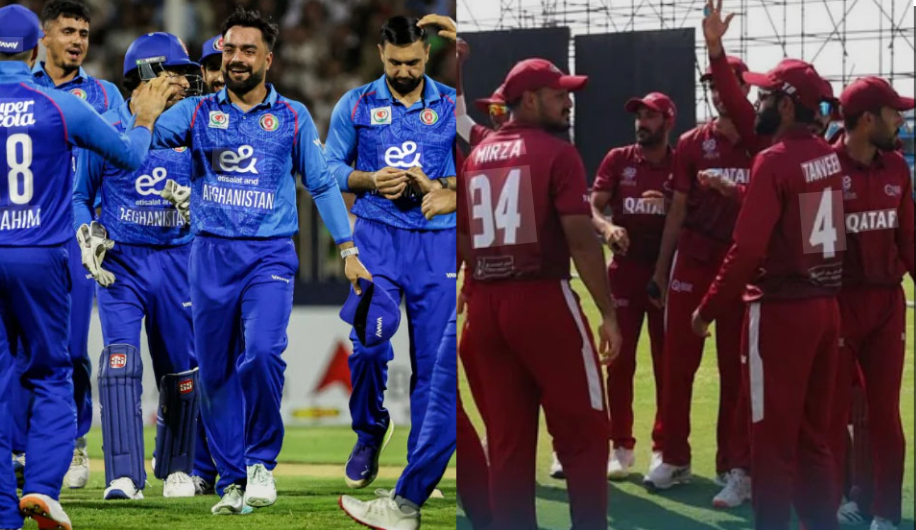
Qatar National Cricket Team Vs Afghanistan National Cricket Team Match Scorecard
Table of Contents
The contest between these two emerging cricketing sides reflects the growing competitiveness in associate cricket Each encounter has carried its own intensity, shaped by evolving strategies, developing player skills, and shifting momentum across different phases of play. One team has often relied on disciplined bowling structures and spin strength, while the other has focused on building resilience through partnerships and improving batting depth. Over time, their meetings have transformed from one-sided contests into closely fought battles. Fans have witnessed pressure situations, tactical experiments, and individual brilliance that added meaning to every clash. This growing rivalry highlights how associate cricket continues to rise in quality and global recognition.
Latest Matches Table
| Date | Format | Tournament | Venue | Result | Margin |
| 15 Feb 2026 | T20I | Bahrain tour of Qatar | Doha | Qatar won | 51 runs |
| 14 Feb 2026 | T20I | Bahrain tour of Qatar | Doha | Bahrain won | 5 wickets |
| 12 Feb 2026 | T20I | Bahrain tour of Qatar | Doha | Qatar won | 31 runs |
| 11 Feb 2026 | T20I | Bahrain tour of Qatar | Doha | Qatar won | 51 runs |
| 09 Feb 2026 | T20I | Bahrain tour of Qatar | Doha | Qatar won | 7 wickets |
| 11 Nov 2025 | T20I | Afghanistan tour of Qatar | Doha | Afghanistan won | 25 runs |
Team Statistics Summary Table
| Team | Total Runs | Overs Played | Run Rate | Wickets Lost | Extras Conceded |
| Afghanistan | 149 | 20.0 | 7.45 | 8 | 11 |
| Qatar | 124 | 20.0 | 6.20 | 7 | 13 |
| Afghanistan | 173 | 20.0 | 8.65 | 4 | 8 |
| Qatar | 108 | 18.3 | 5.83 | 10 | 14 |
| Qatar | 205 | 20.0 | 10.25 | 6 | 9 |
| Bahrain | 154 | 20.0 | 7.70 | 8 | 12 |
Individual Batting Records Table
| Player Name | Team Name | Runs Scored | Balls Faced | Fours | Sixes |
| Darwish Abdul Rasooli | Afghanistan | 66 | 37 | 6 | 4 |
| Mirza Mohammed Baig | Qatar | 26 | 21 | 2 | 1 |
| Nangeyalia Kharote | Afghanistan | 23 | 12 | 2 | 2 |
| Mohammad Ishaq | Afghanistan | 22 | 28 | 1 | 0 |
| Muhammad-Asim Liaqat-Ali | Qatar | 19 | 17 | 1 | 0 |
| Mohammad Ahnaff | Qatar | 17 | 22 | 2 | 0 |
Individual Bowling Records Table
| Player Name | Team Name | Overs Bowled | Runs Conceded | Wickets Taken | Economy Rate |
| Owais Ahmed | Qatar | 4.0 | 29 | 4 | 7.25 |
| Farmanullah Safi | Afghanistan | 3.0 | 19 | 2 | 6.33 |
| Muhammad Zaman | Qatar | 4.0 | 18 | 2 | 4.50 |
| Abdullah Ahmadzai | Afghanistan | 4.0 | 26 | 2 | 6.50 |
| Allah Ghazanfar | Afghanistan | 4.0 | 9 | 1 | 2.25 |
| Qais Ahmad | Afghanistan | 3.0 | 20 | 1 | 6.67 |
Rising Encounter in Asian Associate Cricket
The early meetings between the two sides created a quiet but meaningful beginning in Asian associate cricket. One team was still developing its structure while the other carried a reputation for aggressive bowling depth and strong spin options. The first encounter was less about dominance and more about understanding conditions, adapting to pressure, and testing bench strength. The batting side tried to build partnerships carefully, but regular breakthroughs kept the scoring rate under control. On the other hand, the bowling attack relied on tight lines and disciplined field placements to restrict scoring opportunities. Fans began to notice the contrast in experience levels and tactical awareness. Even though the match did not produce a high scoring thriller, it set the foundation for a growing competitive spirit. Coaches from both sides emphasized learning from mistakes, especially in middle overs where momentum shifted frequently. This match became a reference point for future planning and strategy refinement.
| Match Phase | Batting Approach | Bowling Strategy | Outcome |
| Powerplay | Cautious start | Tight new ball line | Low scoring start |
| Middle overs | Attempted rotation | Spin control applied | Wickets under pressure |
| Death overs | Risk hitting | Yorkers and variation | Controlled finish |
| Final phase | Defensive rebuild | Field pressure setup | Batting slowdown |
Spin Dominance and Tactical Adjustments
As the rivalry progressed, spin bowling started playing a decisive role. One team heavily depended on wrist spin variations while the other struggled to rotate strike effectively. Batters often found it difficult to read the turn and pace changes, leading to frequent dot ball pressure. This phase of competition highlighted technical gaps and the need for stronger footwork against spin. Bowling captains made smart field adjustments, placing more fielders inside the circle to cut singles and force mistakes. Batting teams responded by trying sweep shots and aerial risks, but consistency remained a challenge. This stage of rivalry became a learning curve where match awareness mattered more than raw talent. The tactical battle between containment and aggression defined the middle phase of their encounters.
| Tactical Area | Bowling Execution | Batting Response | Match Impact |
| Spin control | Flight and drift | Sweep attempts | Frequent wickets |
| Field setup | Close catching ring | Strike rotation | Pressure buildup |
| Middle overs | Defensive spin lines | Risk shots | Momentum shifts |
| Strategy change | Slower deliveries | Aggressive intent | Mixed results |
Batting Resilience Under Pressure
One of the most important developments in this rivalry was the improvement in batting resilience. Earlier innings showed fragile starts, but gradually partnerships started forming under pressure situations. Batters focused on building innings slowly rather than chasing quick runs. This shift allowed teams to post more competitive totals and stay in matches longer. However, pressure from quality bowling attacks still created collapses at crucial moments. Communication between batters improved, especially in running between the wickets and strike rotation planning. Coaches emphasized the importance of minimizing dot balls and capitalizing on loose deliveries. This phase also saw emergence of key performers who could anchor innings while others played around them. Despite improvements, consistency remained a challenge across both sides.
| Batting Factor | Early Phase | Later Phase | Result |
| Opening stand | Weak starts | Improved stability | Better foundations |
| Strike rotation | Limited | More active | Reduced pressure |
| Partnerships | Rare | Frequent | Competitive totals |
| Finishing ability | Poor | Developing | Improved scores |
Bowling Attacks and Game Control
Bowling units played a central role in shaping match outcomes throughout the rivalry. One side relied on pace variations while the other leaned heavily on spin dominance. Bowlers learned to exploit pitch conditions more effectively as matches progressed. Early overs focused on swing and seam movement, while middle overs emphasized containment. Death overs became a testing ground for accuracy under pressure. Misplaced deliveries often changed the direction of matches quickly. Captains experimented with bowling rotations to maintain control, especially when partnerships began to grow. This tactical evolution made bowling attacks more adaptable and intelligent over time.
| Bowling Phase | Primary Strategy | Key Weapon | Effectiveness |
| Early overs | Swing attack | Seam movement | Early wickets |
| Middle overs | Containment | Spin variation | Run control |
| Pressure overs | Mixed plans | Slower balls | Breakthroughs |
| Death overs | Accuracy focus | Yorkers | Match balance |
Fielding Intensity and Match Awareness
Fielding standards gradually became a defining difference between the two sides. One team consistently showed sharper ground fielding and quicker throws, while the other worked on reducing errors and improving coordination. Catching opportunities often decided match momentum, especially in tightly contested games. Direct hits and boundary saves played a key role in shifting pressure back onto batters. Coaches placed strong emphasis on fitness levels and reaction time. Over time, both teams improved their awareness of match situations, leading to smarter field placements and better anticipation of shots. Fielding became not just a supporting skill but a match-winning factor in several encounters.
| Fielding Aspect | Performance Level | Improvement Area | Impact |
| Catching | Mixed | Consistency | Wicket chances |
| Ground fielding | Improving | Speed | Runs saved |
| Throw accuracy | Moderate | Direct hits | Pressure creation |
| Coordination | Developing | Communication | Fewer errors |
Captaincy Decisions and Match Control
Leadership played a crucial role in shaping how matches unfolded. Captains from both sides experimented with bowling changes, field setups, and batting order adjustments. Some decisions worked perfectly under pressure, while others exposed tactical gaps. Reading pitch conditions quickly became essential for success. Defensive strategies were often used when defending low totals, while aggressive field placements were introduced when early wickets were needed. Captains also had to manage player confidence during tough phases of the game. This leadership battle added another layer of depth to the rivalry.
| Leadership Area | Strategy Used | Success Rate | Match Effect |
| Bowling changes | Rotational use | High | Wicket control |
| Field setup | Aggressive ring | Moderate | Pressure build |
| Batting order | Flexible plan | Mixed | Stability impact |
| Game reading | Pitch based | Improving | Better decisions |
Turning Points and Match Pressure
Several matches between the two sides were decided by small but crucial moments. A single over, dropped catch, or quick partnership often shifted momentum entirely. These turning points highlighted the importance of staying focused throughout the innings. Pressure situations exposed weaknesses in both batting depth and bowling execution. Teams that handled crunch moments better often came out on top. Emotional intensity increased as matches became more competitive, with players reacting strongly to momentum swings. These moments became defining highlights in the rivalry narrative.
| Turning Point | Situation | Outcome | Match Impact |
| Drop catch | Middle overs | Extra runs | Momentum shift |
| Quick wickets | Powerplay | Collapse | Pressure increase |
| Partnership | Chase phase | Recovery | Stability |
| Death over | Final push | Score change | Result impact |
Evolution of Competitive Balance
Over time, the gap between the two teams started narrowing. One side improved its batting depth while the other refined its bowling strategies. This evolution made contests more unpredictable and exciting. Matches were no longer one-sided, and both teams had phases of dominance. Preparation levels improved with better analysis of opposition strengths and weaknesses. Coaching staff focused on adapting to different match situations. This balance created a stronger rivalry identity in associate cricket and made each encounter more meaningful than the last.
| Evolution Area | Initial Stage | Current Stage | Result |
| Batting depth | Weak | Improved | Competitive totals |
| Bowling plans | Basic | Advanced | Tactical variety |
| Match control | One-sided | Balanced | Unpredictable results |
| Preparation | Limited | Structured | Better performance |
Conclusion
The journey between these two teams showcases how competitive balance in associate cricket has steadily improved. What began as learning experiences has now turned into tactical battles where small moments decide outcomes. Both sides have developed stronger batting approaches, sharper bowling plans, and better fielding intensity. Matches are no longer predictable, and momentum shifts frequently keep fans engaged throughout the game. This rivalry stands as a reminder that progress in cricket comes through persistence, adaptation, and exposure to high-pressure situations. As both teams continue to evolve, future encounters promise even greater excitement, closer finishes, and more memorable performances.