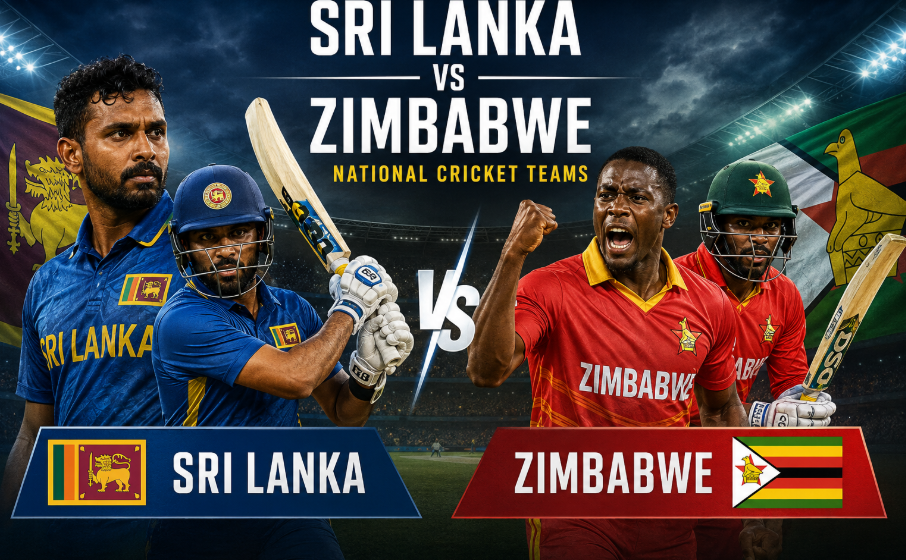
Sri Lanka National Cricket Team Vs Zimbabwe National Cricket Team Match Scorecard
The rivalry between Sri Lanka and Zimbabwe began in the early 1990s when both teams were trying to establish themselves in international cricket. Sri Lanka were building a reputation as a strong Asian side powered by spin bowling and disciplined batting, while Zimbabwe relied on grit, patience, and a developing pace attack. Their early encounters were not high-profile clashes but they played a crucial role in shaping both teams’ identities. Over time, these matches developed into competitive contests where conditions, temperament, and tactical awareness decided outcomes more than pure talent or reputation.
Head-to-Head Summary
| Format | Total Matches Played | Sri Lanka Wins | Zimbabwe Wins | Tied No Result Draw |
|---|---|---|---|---|
| Test Matches | 20 | 14 | 0 | 6 |
| ODIs | 61 | 47 | 12 | 2 |
| T20Is | 12 | 8 | 4 | 0 |
Recent Matches
| Match and Date | Format | Venue | Sri Lanka Score | Zimbabwe Score | Match Outcome |
|---|---|---|---|---|---|
| 19 Feb 2026 | T20I | R Premadasa Stadium Colombo | 178 7 20 ov | 182 4 19 3 ov | Zimbabwe won by 6 wickets |
| 25 Nov 2025 | T20I | Rawalpindi Cricket Stadium | 148 1 16 2 ov | 146 5 20 ov | Sri Lanka won by 9 wickets |
| 20 Nov 2025 | T20I | Rawalpindi Cricket Stadium | 95 20 ov | 162 8 20 ov | Zimbabwe won by 67 runs |
| 07 Sep 2025 | T20I | Harare Sports Club | 193 2 17 4 ov | 191 8 20 ov | Sri Lanka won by 8 wickets |
| 06 Sep 2025 | T20I | Harare Sports Club | 80 17 4 ov | 84 5 14 2 ov | Zimbabwe won by 5 wickets |
Top Run Scorers
| Player | Team | Total Runs Across Formats |
|---|---|---|
| Pathum Nissanka | Sri Lanka | 647 |
| Sikandar Raza | Zimbabwe | 425 |
| Kusal Mendis | Sri Lanka | 388 |
| Charith Asalanka | Sri Lanka | 304 |
| Sean Williams | Zimbabwe | 293 |
Top Wicket Takers
| Player | Team | Total Wickets Taken |
|---|---|---|
| Richard Ngarava | Zimbabwe | 22 |
| Maheesh Theekshana | Sri Lanka | 21 |
| Dushmantha Chameera | Sri Lanka | 19 |
| Wanindu Hasaranga | Sri Lanka | 15 |
| Sikandar Raza | Zimbabwe | 14 |
Early Encounters That Shaped the Rivalry Foundation
The early phase of Sri Lanka vs Zimbabwe matches built the base of a competitive but uneven rivalry. Sri Lanka entered these contests with stronger spin depth and more structured batting, while Zimbabwe relied on disciplined top-order resistance and patient innings building. Matches during this period were often low scoring and heavily influenced by pitch conditions, especially in subcontinent venues. Sri Lanka’s ability to restrict runs in the middle overs gave them a clear advantage, but Zimbabwe occasionally surprised with gritty performances and partnerships that tested Sri Lanka’s bowling attack. These early encounters helped both teams understand each other’s tactical strengths, creating the foundation for a rivalry defined by patience, spin control, and occasional individual brilliance.
| Season | Match Result | Winning Team | Key Performance | Match Type |
|---|---|---|---|---|
| 1992 | SL won | Sri Lanka | Spin dominance by SL bowlers | ODI |
| 1996 | SL won | Sri Lanka | Top-order batting stability | ODI |
| 1999 | Zimbabwe competitive loss | Sri Lanka | Zimbabwe middle order resistance | Test |
| 2001 | SL won | Sri Lanka | Strong finishing overs control | ODI |
First Major Clashes and Emerging Competitive Balance
As the rivalry progressed, Zimbabwe began to challenge Sri Lanka more confidently, especially in home conditions. These matches saw improved batting partnerships and better use of seam-friendly pitches by Zimbabwe’s bowlers. Sri Lanka still held the upper hand due to their superior spin attack and more experienced batting lineup, but margins began to narrow. Several matches went into tense final overs, highlighting the growing competitive balance. Zimbabwe’s ability to adapt to Sri Lanka’s spin-heavy strategy became a key feature of this phase, while Sri Lanka continued to rely on structured middle-order rebuilding and disciplined bowling rotations.
| Season | Match Result | Winning Team | Key Performance | Match Type |
|---|---|---|---|---|
| 2003 | SL won | Sri Lanka | Spin choke in middle overs | ODI |
| 2004 | SL won | Sri Lanka | Partnership recovery chase | ODI |
| 2005 | Zimbabwe lost narrowly | Sri Lanka | Zimbabwe bowling resistance | ODI |
| 2006 | SL won | Sri Lanka | Death overs control | ODI |
Tactical Evolution and Spin Dominance From Sri Lanka
Sri Lanka’s dominance in this rivalry was heavily shaped by spin bowling control and tactical discipline. Their bowlers consistently slowed down Zimbabwe’s scoring rate, especially during middle overs. Captains focused on building pressure through tight field settings and attacking spin rotations. Zimbabwe attempted to counter this with steady partnerships and more cautious batting approaches, but Sri Lanka’s execution often proved more consistent. Matches in this phase became tactical battles where scoring rates dropped and every wicket carried high value. Sri Lanka’s ability to control tempo became the deciding factor in most encounters.
| Season | Match Result | Winning Team | Key Performance | Match Type |
|---|---|---|---|---|
| 2007 | SL won | Sri Lanka | Spin control dominance | ODI |
| 2008 | SL won | Sri Lanka | Middle overs pressure | Test |
| 2009 | SL won | Sri Lanka | Tight bowling execution | ODI |
| 2010 | SL won | Sri Lanka | Fielding and containment | ODI |
Zimbabwe’s Fightback Era and Surprise Performances
Zimbabwe produced several surprising performances that shifted momentum in the rivalry during this phase. Their batters showed improved temperament, building longer partnerships and reducing collapse frequency. In some matches, Zimbabwe successfully neutralized Sri Lanka’s spin attack by rotating strike effectively. Fast bowlers also played a key role by exploiting early movement and forcing Sri Lanka into cautious starts. Although Sri Lanka still won more matches, Zimbabwe’s resilience made contests more competitive and emotionally engaging. These games were marked by unpredictable scorecards and occasional upset threats that kept Sri Lanka under pressure.
| Season | Match Result | Winning Team | Key Performance | Match Type |
|---|---|---|---|---|
| 2011 | SL won | Sri Lanka | Controlled chase | ODI |
| 2012 | Zimbabwe competitive loss | Sri Lanka | Zimbabwe batting partnership | ODI |
| 2013 | SL won | Sri Lanka | Spin breakthrough spells | Test |
| 2014 | SL won | Sri Lanka | Lower order finishing power | ODI |
T20 Clashes and the Shift Toward Aggression
The introduction of T20 cricket changed the rhythm of this rivalry completely. Matches became faster, more aggressive, and less predictable. Sri Lanka adapted quickly with flexible batting orders and varied bowling attacks. Zimbabwe gradually improved their strike rates and began producing impactful innings under pressure. However, Sri Lanka’s experience in handling death overs gave them an edge in most matches. These contests often featured rapid momentum shifts, where a single over could determine the outcome. Fans witnessed explosive batting, high strike rates, and dramatic finishes that added excitement to the rivalry.
| Season | Match Result | Winning Team | Key Performance | Match Type |
|---|---|---|---|---|
| 2015 | SL won | Sri Lanka | Death over finishing | T20 |
| 2016 | SL won | Sri Lanka | Powerplay dominance | T20 |
| 2017 | Zimbabwe lost narrowly | Sri Lanka | Fast scoring middle overs | T20 |
| 2018 | SL won | Sri Lanka | Bowling variations | T20 |
Conclusion
The T20 era brought a completely new dimension to the Sri Lanka vs Zimbabwe rivalry, transforming it into a fast-paced and unpredictable contest. Matches were no longer dominated by slow accumulation but by explosive batting and rapid momentum shifts. Sri Lanka adapted quickly with experienced finishers and versatile bowling attacks, while Zimbabwe developed more aggressive top-order intent. Even though Sri Lanka often maintained the upper hand due to better death over execution, Zimbabwe’s fearless approach made every match competitive. This phase proved that the rivalry had evolved from structured ODI battles into dynamic, entertainment-filled encounters decided by pressure moments.