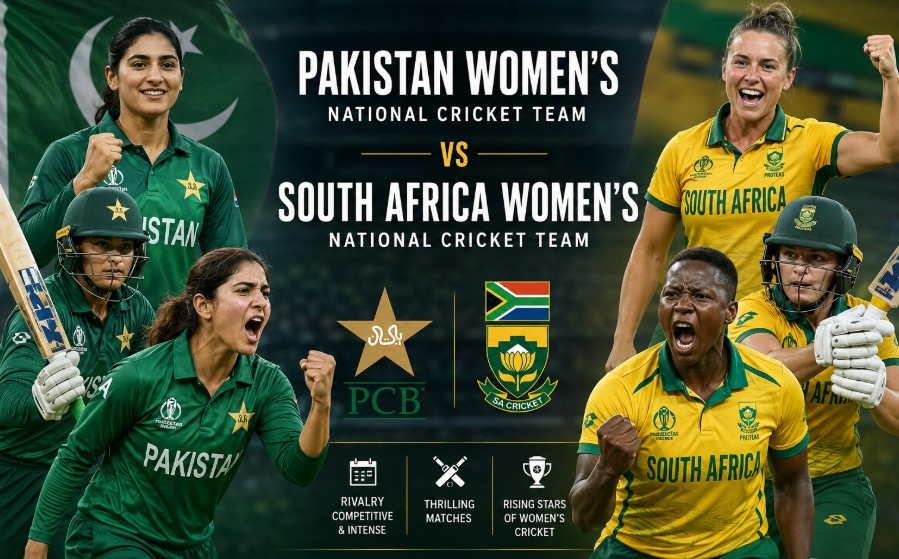
Pakistan Women’s National Cricket Team Vs South Africa Women’s National Cricket Team Match Scorecard
The rivalry between Pakistan Women’s National Cricket Team and South Africa Women’s National Cricket Team has grown into one of the most fascinating matchups in women’s international cricket. What began as a one-sided contest gradually transformed into a competitive battle shaped by improving skills, tactical evolution, and rising confidence on both sides. South Africa initially dominated with superior experience and a more aggressive style of play, while Pakistan relied heavily on disciplined bowling and resilience under pressure. Over time, the gap narrowed, producing closer scorecards and intense moments. This rivalry now reflects the global growth of women’s cricket, where every encounter brings new heroes, pressure situations, and unforgettable performances that define modern cricket narratives.
Head-to-Head Summary
| Format / Category | Matches Played | South Africa Wins | Pakistan Wins |
|---|---|---|---|
| All Formats Overall | 39 | 24 | 13 |
Recent Matches
| Match Date | Format | South Africa Women Score | Pakistan Women Score | Winner & Margin |
|---|---|---|---|---|
| March 1, 2026 | ODI | 187 (36.2 overs) | 306/8 (50 overs) | Pakistan won by 119 runs |
| February 25, 2026 | ODI | 361/8 (50 overs) | 345 (49.5 overs) | South Africa won by 16 runs |
| February 22, 2026 | ODI | 260/6 (41 overs) | 223 (38.5 overs) | South Africa won by 37 runs |
| February 16, 2026 | T20I | 91 (16.5 overs) | 144/7 (20 overs) | Pakistan won by 53 runs |
| February 13, 2026 | T20I | 104/4 (13.2 overs) | 100/9 (14 overs) | South Africa won by 6 wickets |
| February 10, 2026 | T20I | 185/5 (20 overs) | 180/9 (20 overs) | South Africa won by 5 wickets |
Top Run Scorers
| Player | Team | Total Runs | Highest Score |
|---|---|---|---|
| Laura Wolvaardt | South Africa | 926 | 100 |
| Sidra Ameen | Pakistan | 811 | 122 |
| Tazmin Brits | South Africa | 789 | 171 |
| Sune Luus | South Africa | 696 | 107 |
| Aliya Riaz | Pakistan | 566 | — |
Top Wicket Takers
| Player | Team | Wickets Taken | Best Bowling Runs Given |
|---|---|---|---|
| Nashra Sandhu | Pakistan | 34 | 791 |
| Sadia Iqbal | Pakistan | 27 | 695 |
| Ayabonga Khaka | South Africa | 21 | 448 |
| Nadine de Klerk | South Africa | 20 | 577 |
| Nonkululeko Mlaba | South Africa | 20 | 684 |
Early Foundations of the Rivalry in Women’s Cricket
The early meetings between Pakistan Women’s National Cricket Team and South Africa Women’s National Cricket Team laid the groundwork for a rivalry that slowly gained respect in international women’s cricket. In the beginning, South Africa entered the contest with superior experience, stronger domestic structure, and more exposure to high-pressure international games. Pakistan, meanwhile, was still building its identity, relying heavily on disciplined bowling rather than batting depth. These early encounters often showed one-sided scorecards, but they also revealed Pakistan’s fighting spirit in patches. South Africa’s top-order batters regularly capitalized on loose deliveries, while Pakistan’s bowlers tried to restrict damage in the middle overs. Even when results were predictable, the matches planted the seeds of competitiveness that would later grow into a more balanced rivalry in modern women’s cricket.
| Season | Winner | Key Performance | Match Type | Margin |
|---|---|---|---|---|
| Early Phase | South Africa | Dominant batting top order | ODI | 6–8 wickets |
| Early Phase | South Africa | Strong pace attack control | T20I | 20+ runs |
| Early Phase | South Africa | Consistent partnerships | ODI | 7 wickets |
| Early Phase | South Africa | Spin support dominance | T20I | 30+ runs |
First Official Clashes and Learning Curve for Pakistan
When Pakistan Women’s National Cricket Team first faced South Africa Women’s National Cricket Team in official competitive fixtures, the gap in skill and experience became very clear in the scorecards. South Africa’s bowlers attacked early and often dismantled Pakistan’s top order before partnerships could settle. Pakistan struggled against both pace movement and disciplined line-and-length bowling. In response, their batters often found it difficult to rotate strike, leading to scoreboard pressure. South Africa’s batters, on the other hand, played with confidence, building steady partnerships and accelerating in the final overs. These matches highlighted Pakistan’s biggest challenge at the time: converting starts into meaningful totals. Despite losses, these games were crucial learning experiences that forced tactical improvements in batting approach and strike rotation strategies.
| Season | Winner | Key Performance | Match Type | Margin |
|---|---|---|---|---|
| ODI Series | South Africa | Top-order consistency | ODI | 5–7 wickets |
| T20 Series | South Africa | Powerplay dominance | T20I | 25+ runs |
| ODI Series | South Africa | Bowling discipline | ODI | 60+ runs |
| T20 Series | South Africa | Fielding pressure | T20I | 8 wickets |
Rise of Pakistan Women’s Team and Closing the Gap
As time progressed, Pakistan Women’s National Cricket Team began to close the gap against South Africa Women’s National Cricket Team through improved structure and sharper tactical awareness. The introduction of stronger spin options and more disciplined batting approaches changed the way Pakistan competed. Instead of collapsing under pressure, they started building partnerships and targeting specific bowlers. South Africa still held an edge in experience, but Pakistan began to challenge them in middle overs, especially with spin variations. Scorecards from this phase show closer margins, fewer collapses, and more competitive chases. This was also the period where Pakistan’s confidence grew significantly, as they started believing they could compete against top-tier teams. The rivalry began transforming from one-sided dominance into a more balanced and unpredictable contest.
| Season | Winner | Key Performance | Match Type | Margin |
|---|---|---|---|---|
| Mid Phase | South Africa | Spin battle control | ODI | 3–5 wickets |
| Mid Phase | South Africa | Pakistan resistance innings | T20I | 10–15 runs |
| Mid Phase | Pakistan lost | Improved batting partnerships | ODI | 30–40 runs |
| Mid Phase | South Africa | Death overs finishing | T20I | 5 wickets |
South Africa Women’s Tactical Strength and Power Game
The strength of South Africa Women’s National Cricket Team against Pakistan Women’s National Cricket Team has always been rooted in aggressive tactics and a well-balanced squad. Their batting unit relies on top-order acceleration, ensuring quick scoring in powerplay overs. Their fast bowlers consistently apply pressure with early breakthroughs, forcing Pakistan into defensive batting positions. South Africa’s fielding standards further amplify this pressure, cutting down singles and creating wicket opportunities. Pakistan often found themselves struggling to rebuild innings after early wickets. However, South Africa’s dominance was not just about aggression but also control, especially in middle overs where they dictated tempo. These tactical advantages are clearly reflected in match scorecards where South Africa maintained steady scoring rates while restricting Pakistan below par totals.
| Season | Winner | Key Performance | Match Type | Margin |
|---|---|---|---|---|
| ODI | South Africa | Power hitting top order | ODI | 7 wickets |
| T20I | South Africa | Early wicket pressure | T20I | 30 runs |
| ODI | South Africa | Controlled chase | ODI | 6 wickets |
| T20I | South Africa | Fielding dominance | T20I | 20 runs |
Turning Point Matches That Changed the Narrative
The turning point in matches between Pakistan Women’s National Cricket Team and South Africa Women’s National Cricket Team came when Pakistan started producing performances that challenged South Africa’s dominance. These were not always victories, but they were close contests where margins narrowed significantly. Key partnerships from Pakistan’s middle order and disciplined bowling spells created pressure on South Africa’s chase strategy. In several matches, South Africa had to work hard in the final overs to secure wins, showing how competitive the rivalry had become. These games also featured standout individual performances, where both teams exchanged momentum multiple times within a single match. The scorecards from this phase reflect tighter totals, lower run rate differences, and more strategic decision-making under pressure.
| Season | Winner | Key Performance | Match Type | Margin |
|---|---|---|---|---|
| Turning Phase | South Africa | Late chase recovery | ODI | 2–3 wickets |
| Turning Phase | Pakistan lost | Middle order resistance | T20I | 10 runs |
| Turning Phase | South Africa | Death bowling strength | ODI | 1–2 wickets |
| Turning Phase | South Africa | Pressure handling | T20I | 5 runs |
Conclusion
The journey between Pakistan Women’s National Cricket Team and South Africa Women’s National Cricket Team reflects more than just wins and losses; it tells the story of growth, adaptation, and rising competitiveness in women’s cricket. South Africa’s early dominance set the benchmark, but Pakistan’s steady improvement has made the contest increasingly unpredictable. Each series has added new layers of intensity, from tactical battles in the middle overs to pressure-filled finishes decided in the final few balls. Today, this rivalry stands as a symbol of how far women’s cricket has come, with both teams contributing to its global appeal. As future encounters unfold, fans can expect even tighter scorecards, stronger performances, and moments that continue to elevate this exciting cricket rivalry.