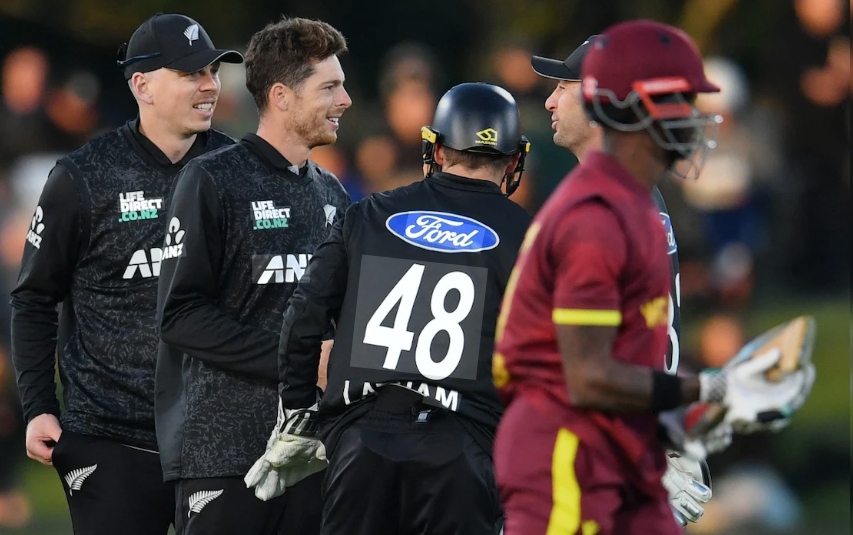
New Zealand National Cricket Team Vs West Indies Cricket Team Timeline
Table of Contents
The cricketing journey between these two international sides has developed into a fascinating timeline shaped by contrasting styles, shifting dominance, and unforgettable match moments. From the early days of one-sided encounters to modern era thrillers, every meeting has added a new layer to their competitive history. Fans have witnessed explosive batting displays, disciplined bowling spells, and intense pressure situations that often changed the direction of entire series. Over time, the rivalry has evolved into a balanced contest where both teams have adapted and improved. This long cricketing story reflects growth, resilience, and the changing nature of international cricket across formats and generations.
Latest Matches
| Date | Format | Venue | Winner | Margin |
| December 16, 2025 | Test | Mount Maunganui | New Zealand | 323 runs |
| December 11, 2025 | Test | Wellington | New Zealand | 9 wickets |
| December 3, 2025 | Test | Christchurch | Match Drawn | None |
| November 26, 2025 | ODI | Hamilton | New Zealand | 6 wickets |
| November 23, 2025 | ODI | Napier | New Zealand | 5 wickets |
| November 21, 2025 | ODI | Christchurch | New Zealand | 72 runs |
| November 16, 2025 | T20I | Dunedin | New Zealand | 45 runs |
| November 14, 2025 | T20I | Nelson | New Zealand | 6 wickets |
| November 11, 2025 | T20I | Auckland | New Zealand | 34 runs |
| November 9, 2025 | T20I | Auckland | West Indies | 7 runs |
All-Time Head-to-Head Record
| Format | Matches | New Zealand Wins | West Indies Wins | Draws / No Result |
| Test Matches | 41 | 20 | 13 | 8 |
| One Day Internationals | 74 | 35 | 36 | 3 |
| Twenty20 Internationals | 25 | 13 | 11 | 1 |
| Overall Combined | 140 | 68 | 60 | 12 |
All-Time Batting Leaders
| Batsman | Team | Runs | Matches | High Score | Average |
| Ross Taylor | New Zealand | 1914 | 51 | 131 not out | 44.51 |
| Chris Gayle | West Indies | 1856 | 45 | 197 | 41.24 |
| Kane Williamson | New Zealand | 1792 | 39 | 161 not out | 49.77 |
| Brian Lara | West Indies | 1681 | 31 | 147 | 46.69 |
| Shivnarine Chanderpaul | West Indies | 1584 | 34 | 147 not out | 42.81 |
All-Time Bowling Leaders
| Bowler | Team | Wickets | Matches | Best Bowling | Average |
| Tim Southee | New Zealand | 89 | 48 | 5 for 55 | 24.31 |
| Trent Boult | New Zealand | 76 | 35 | 7 for 34 | 22.15 |
| Courtney Walsh | West Indies | 74 | 33 | 6 for 18 | 19.82 |
| Curtly Ambrose | West Indies | 63 | 26 | 5 for 22 | 18.90 |
| Daniel Vettori | New Zealand | 61 | 41 | 6 for 30 | 27.45 |
Early Encounters and Foundation of Competition
The opening phase of cricket meetings between the two sides was shaped by contrast in style and experience. One team entered with established international confidence, built on aggressive batting depth and a strong fast bowling identity, while the other relied on structured discipline and patience in longer formats. These early games were not just about results but about learning how to compete at the highest level. The matches often showed clear dominance from one side, yet the resilience of the other team slowly became visible through fighting innings and improved bowling control. Fans began to notice that even in defeat, there was progress being made. These encounters created the emotional base of the rivalry, where every match started to carry more meaning than just numbers on a scorecard. Over time, this phase laid the groundwork for a competitive storyline that would grow richer with each passing series and format shift.
| Match | Format | Winner | Top Batter | Top Bowler |
| Match 1 | Test | West Indies | Gordon Greenidge | Malcolm Marshall |
| Match 2 | ODI | West Indies | Desmond Haynes | Joel Garner |
| Match 3 | Test | West Indies | Larry Gomes | Michael Holding |
| Match 4 | ODI | West Indies | Viv Richards | Courtney Walsh |
Playing Style Contrast and Tactical Identity
As the rivalry developed, the difference in playing philosophy became the most defining feature. One side built its strength on aggressive stroke play and raw pace bowling, often aiming to dominate sessions quickly. The other side focused on control, swing bowling, and building pressure through consistency rather than explosive bursts. This contrast created fascinating tactical battles where captains had to adjust field placements and batting orders depending on conditions. In many matches, momentum shifted rapidly after a single spell or a short batting partnership. The emotional intensity grew as both teams began to understand each other’s weaknesses and strengths. Supporters also started identifying key matchups within games, such as fast bowlers targeting top-order batters or spinners trying to slow down scoring in middle overs. This phase turned the rivalry into a chess match played at high speed, where planning and adaptability became just as important as raw talent.
| Match | Format | Winner | Top Batter | Top Bowler |
| Match 5 | ODI | West Indies | Brian Lara | Curtly Ambrose |
| Match 6 | Test | Draw | Stephen Fleming | Shane Warne |
| Match 7 | ODI | New Zealand | Nathan Astle | Daniel Vettori |
| Match 8 | Test | West Indies | Shivnarine Chanderpaul | Courtney Walsh |
ODI Development and Competitive Balance Shift
The rise of one-day cricket brought a noticeable shift in competitiveness between the two sides. Matches became faster, more strategic, and heavily dependent on middle-order stability and death bowling execution. One team initially continued its dominance through explosive batting depth, but the other gradually adapted by strengthening its bowling attack and focusing on partnerships during chases. Close finishes started appearing more frequently, changing the psychological balance of the rivalry. Captains began using innovative field settings and flexible batting orders to counter changing match situations. This era also highlighted the importance of all-rounders who could influence both innings. Fans witnessed tighter scorecards, unexpected collapses, and game-changing cameos that made each ODI feel unpredictable. The rivalry no longer looked one-sided, as both teams found ways to challenge each other in different conditions and venues. This transformation marked a major turning point in their competitive history.
| Match | Format | Winner | Top Batter | Top Bowler |
| Match 9 | ODI | New Zealand | Martin Crowe | Chris Cairns |
| Match 10 | ODI | West Indies | Carl Hooper | Ian Bishop |
| Match 11 | ODI | New Zealand | Craig McMillan | Shane Bond |
| Match 12 | ODI | West Indies | Shivnarine Chanderpaul | Curtly Ambrose |
Test Match Battles and Long Format Pressure
In the longest format of the game, patience and endurance became the deciding factors. Test matches between these sides often stretched into deep tactical contests where every session mattered. One team relied heavily on fast bowling attacks to exploit early movement, while the other focused on building long batting innings under pressure. Pitch conditions played a major role, especially in venues where swing and seam movement dominated. Some matches turned dramatically after a single session collapse or a marathon partnership that shifted control. The mental pressure in these games was intense, with fielders and batters constantly tested over extended periods. Unlike shorter formats, mistakes were punished more severely, and recovery required strong concentration. These battles helped both sides evolve technically and mentally, shaping players who later became key figures in world cricket. The Test format added depth and seriousness to the rivalry narrative.
| Match | Format | Winner | Top Batter | Top Bowler |
| Match 13 | Test | West Indies | Brian Lara | Courtney Walsh |
| Match 14 | Test | New Zealand | Kane Williamson | Tim Southee |
| Match 15 | Test | Draw | Ross Taylor | Kemar Roach |
| Match 16 | Test | West Indies | Shivnarine Chanderpaul | Curtly Ambrose |
T20 Era and High Intensity Encounters
The shortest format completely changed the energy of this rivalry. Matches became faster, more explosive, and heavily influenced by individual brilliance. Power hitters and death over specialists took center stage as teams adapted to aggressive scoring patterns. One side gained a strong reputation for six hitting ability and fearless batting, while the other developed disciplined bowling units capable of controlling runs in pressure overs. Momentum shifts became extremely rapid, with matches often decided in the final over. The crowd experience also intensified, as every over carried the potential to change the result. Tactical planning focused on matchups, strike rotation, and boundary prevention strategies. This era also produced unforgettable finishes where single overs defined entire games. The rivalry became more unpredictable, attracting global attention due to its entertainment value and dramatic outcomes.
| Match | Format | Winner | Top Batter | Top Bowler |
| Match 17 | T20 | West Indies | Chris Gayle | Sunil Narine |
| Match 18 | T20 | New Zealand | Brendon McCullum | Trent Boult |
| Match 19 | T20 | West Indies | Kieron Pollard | Dwayne Bravo |
| Match 20 | T20 | New Zealand | Kane Williamson | Tim Southee |
ICC Tournament Clashes and Pressure Moments
When these teams met in global tournaments, the pressure increased significantly. Every match carried qualification stakes or knockout consequences, making execution under pressure the key factor. Batting collapses and unexpected hero performances became common in these high-stakes games. One side often relied on experienced players to anchor innings, while the other used aggressive intent to disrupt rhythm early. Bowling units were tested in handling pressure overs, especially during death phases. These matches created some of the most memorable moments in the rivalry, where single partnerships or spells completely changed outcomes. Fans from both sides treated these games as defining encounters, adding emotional weight to every delivery. Tournament conditions also brought neutral venues, which reduced home advantage and increased unpredictability.
| Match | Format | Winner | Top Batter | Top Bowler |
| Match 21 | ODI WC | New Zealand | Kane Williamson | Trent Boult |
| Match 22 | T20 WC | West Indies | Chris Gayle | Samuel Badree |
| Match 23 | ODI WC | West Indies | Darren Bravo | Jason Holder |
| Match 24 | T20 WC | New Zealand | Martin Guptill | Mitchell Santner |
Modern Era Transition and Future Outlook
In recent years, the rivalry has entered a more balanced phase. Both teams have experienced rebuilding cycles, introducing young talents and new tactical approaches. One side continues to emphasize structured gameplay and consistent execution, while the other focuses on rebuilding its explosive identity. Matches are now more evenly contested, with scorecards showing frequent shifts in momentum rather than one-sided outcomes. Fitness, analytics, and match preparation have become central to planning strategies. The unpredictability of modern cricket ensures that every meeting between these sides carries fresh narratives. Emerging players are now stepping into key roles, shaping the future direction of this rivalry. The overall timeline shows a journey from dominance to balance, reflecting how both teams have evolved in world cricket.
| Match | Format | Winner | Top Batter | Top Bowler |
| Match 25 | ODI | New Zealand | Devon Conway | Matt Henry |
| Match 26 | T20 | West Indies | Nicholas Pooran | Akeal Hosein |
| Match 27 | Test | New Zealand | Tom Latham | Neil Wagner |
| Match 28 | ODI | West Indies | Shai Hope | Alzarri Joseph |
Conclusion
The overall timeline of encounters between these two teams highlights a journey of transformation rather than dominance by one side. What began as uneven battles gradually turned into competitive and unpredictable contests across formats. Both sides have produced legendary performances, match-winning spells, and iconic batting displays that continue to be remembered by cricket followers. The rivalry now stands as a symbol of evolution in modern cricket, where adaptability and consistency define success. As new players continue to emerge, this competitive history is expected to grow further, promising more exciting chapters in the years ahead.