Real Madrid Vs Fc Barcelona Timeline
Table of Contents
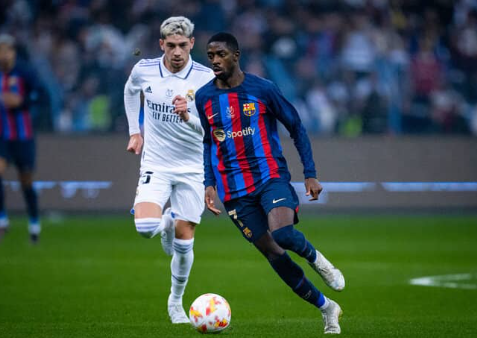
The rivalry between Real Madrid and FC Barcelona stands as the most emotionally charged and globally followed contest in football history. Known as El Clásico, it reflects more than just goals and trophies, carrying decades of political tension, tactical evolution, and iconic individual brilliance. From early Copa del Rey battles to the Messi-Ronaldo era dominance, every phase has reshaped football culture. Fans across the world witness not just a match but a clash of identities, philosophies, and pride. This timeline journey captures the emotional rise, defining moments, and tactical transformations that built football’s greatest rivalry.
Recent matches: Real Madrid Vs FC Barcelona
| Match Date | Venue | Winner | Margin | Madrid Score | Barça Score |
|---|---|---|---|---|---|
| 11-Jan-2026 | Jeddah | Barcelona | 3–2 | 2 | 3 |
| 26-Oct-2025 | Madrid | Real Madrid | 2–1 | 2 | 1 |
| 11-May-2025 | Barcelona | Barcelona | 4–3 | 3 | 4 |
| 26-Apr-2025 | Seville | Barcelona | 3–2 (AET) | 2 | 3 |
| 12-Jan-2025 | Riyadh | Barcelona | 5–2 | 2 | 5 |
| 26-Oct-2024 | Madrid | Barcelona | 4–0 | 0 | 4 |
| 21-Apr-2024 | Madrid | Real Madrid | 3–2 | 3 | 2 |
Top 5 Best Performances (Real Madrid vs Barcelona)
| Player Name | Performance | Team | Season | Match Impact |
|---|---|---|---|---|
| Raphinha | 2 Goals | Barça | 2026 | Man of the Match in the Super Cup final victory. |
| Kylian Mbappé | 3 Goals | Madrid | 2025 | First player to score a Clásico hat-trick and still lose. |
| Robert Lewandowski | 2 Goals | Barça | 2024 | Instrumental in Hansi Flick’s 4–0 statement win at the Bernabéu. |
| Vinícius Júnior | 3 Goals | Madrid | 2024 | First-half hat-trick to dismantle Barça in Saudi Arabia. |
| Jude Bellingham | 2 Goals | Madrid | 2023 | Stunning late brace to win his first league Clásico. |
Best Player Analysis & Key Matchups
| Player | Role | Primary Strength | Head-to-Head Strategy |
|---|---|---|---|
| Vinícius Júnior | Madrid Forward | Explosive Dribbling | Direct threat to Barcelona’s high defensive line with elite pace. |
| Lamine Yamal | Barça Forward | Creative Vision | Teenage sensation who specializes in beating defenders one-on-one. |
| Jude Bellingham | Madrid Midfielder | Clutch Timing | Frequently decides games with late runs into the box. |
| Raphinha | Barça Forward | Finishing & Work-rate | Emerged as the primary match-winner in recent finals under Hansi Flick. |
| Robert Lewandowski | Barça Forward | Clinical Positioning | Masterful at exploiting gaps in Madrid’s central defense. |
Head-To-Head Summary Table
| Statistic | Real Madrid | FC Barcelona |
|---|---|---|
| Total Official Wins | 106 | 105 |
| Total Draws | 52 | 52 |
| Total Official Goals | 447 | 436 |
| Biggest Historic Win | 11–1 (1943) | 7–2 (1950) |
| Most Recent Result | Lost (Jan 2026) | Won (Jan 2026) |
First Competitive Meetings: The Rivalry Takes Shape (1902–1940s)
The earliest competitive meetings between Real Madrid and FC Barcelona marked the birth of football’s most intense rivalry in Spain. The first official clash came in 1902 during the Copa de la Coronación, where Barcelona defeated Madrid FC 3-1, setting the emotional tone for decades. Throughout the early Copa del Rey era, both sides exchanged victories, with Madrid gradually improving while Barcelona maintained technical superiority. Matches were often low scoring, physical, and driven by regional pride rather than global attention. By the 1930s and 1940s, political tensions in Spain intensified the rivalry, turning El Clásico into more than just football. It became a symbol of identity, pride, and emerging national football culture across the country, laying foundation of rivalry legacy.
| Season | Score | Winning Team | Performance | Other Info |
|---|---|---|---|---|
| 1902 Copa de la Coronación | Barcelona 3-1 | FC Barcelona | Barcelona dominant attack | First official meeting |
| 1910 Copa del Rey | N/A | FC Barcelona | Balanced early contests | Rivalry beginning to grow |
| Early 1930s Copa del Rey | N/A | Real Madrid | Physical and improving style | Tactical evolution phase |
| 1943 Copa del Generalísimo | Real Madrid 11-1 | Real Madrid | Highly dominant and controversial win | Political tension peak |
The Modernization of El Clásico (1990s)
The 1990s marked a turning point in the rivalry between Real Madrid and FC Barcelona as football entered a modern, globalized era. Television coverage expanded worldwide, turning El Clásico into a global spectacle rather than just a Spanish contest. Barcelona, under Johan Cruyff’s “Dream Team,” emphasized possession-based attacking football, while Real Madrid focused on rebuilding identity with tactical discipline and physical strength. The decade also saw rising star power, with players like Romário, Hristo Stoichkov, Raúl, and Roberto Carlos defining matches. Stadium intensity grew as fan culture became more commercial and emotionally charged. Tactical refinement replaced raw aggression, and matches became faster, more structured, and highly strategic, laying the groundwork for the legendary modern era battles that would follow in the 2000s.
| Season | Score | Winning Team | Performance | Other Info |
|---|---|---|---|---|
| 1991–92 La Liga | Barcelona 1-0 | FC Barcelona | Cruyff tactical dominance | Dream Team era peak |
| 1993–94 La Liga | Real Madrid 5-0 | Real Madrid | Shock attacking win | Madrid resurgence moment |
| 1996–97 La Liga | Barcelona 3-2 | FC Barcelona | Balanced high intensity clash | Rising global attention |
| 1997–98 La Liga | Real Madrid 2-0 | Real Madrid | Tactical defensive control | Pre-Galácticos foundation phase |
Ronaldinho Era and Barcelona’s Artistic Peak (2005–2008)
Between 2005 and 2008, the rivalry between FC Barcelona and Real Madrid entered one of its most visually dominant phases, driven by the brilliance of Ronaldinho. Barcelona played with unmatched rhythm, creativity, and flair under Frank Rijkaard, turning El Clásico into a stage of artistry rather than just competition. Ronaldinho’s performances at the Santiago Bernabéu, especially the standing ovation he received in 2005, symbolized mutual respect despite rivalry intensity. Meanwhile, Real Madrid struggled with inconsistency despite assembling their Galácticos squad. Barcelona’s passing triangles, quick transitions, and attacking freedom overwhelmed Madrid’s structure in several key clashes. This era defined football beauty, where skill and expression often outweighed tactics, making El Clásico a global entertainment spectacle.
| Season | Score | Winning Team | Performance | Other Info |
|---|---|---|---|---|
| 2005–06 La Liga | Barcelona 3-0 | FC Barcelona | Ronaldinho masterclass | Bernabéu standing ovation |
| 2006–07 La Liga | Real Madrid 2-0 | Real Madrid | Defensive tactical control | Madrid resilience win |
| 2007–08 La Liga | Barcelona 4-1 | FC Barcelona | Attacking dominance | Messi emerging influence |
| 2005–06 La Liga | Barcelona 1-1 | Draw | Balanced high intensity clash | Peak rivalry atmosphere |
Messi vs Ronaldo Era Begins: Greatest Rivalry in Football History (2009–2013)
The period from 2009 to 2013 transformed the rivalry between FC Barcelona and Real Madrid into the most watched football spectacle on the planet, driven by Lionel Messi and Cristiano Ronaldo. This was no longer just a club rivalry; it became a battle of two generational icons shaping football history. Under Pep Guardiola, Barcelona perfected tiki taka, with Messi evolving into a false nine destroying defensive lines. On the other side, Real Madrid under José Mourinho built a counter attacking machine powered by Ronaldo’s speed, power, and finishing. El Clásico matches turned into high scoring wars, emotional confrontations, and tactical chess battles. Every meeting carried title implications, Champions League pressure, and global attention, making this era the peak of intensity in modern football rivalry.
| Season | Score | Winning Team | Performance | Other Info |
|---|---|---|---|---|
| 2009–10 La Liga | Barcelona 2-0 | FC Barcelona | Messi decisive influence | Guardiola tactical control |
| 2009–10 La Liga | Real Madrid 2-0 | Real Madrid | Mourinho defensive mastery | Ronaldo impact growing |
| 2010–11 La Liga | Barcelona 5-0 | FC Barcelona | Historic dominance display | Peak tiki taka performance |
| 2011–12 La Liga | Real Madrid 2-1 | Real Madrid | Counter attack brilliance | Ronaldo match winner role |
Post Ronaldo-Messi Era: Rebuilding and New Generations (2018–2022)
The departure phase of Cristiano Ronaldo from Real Madrid in 2018 and Lionel Messi leaving FC Barcelona in 2021 marked the end of football’s greatest individual rivalry, but El Clásico did not lose its intensity. Instead, it entered a rebuilding phase filled with uncertainty, transition, and new identity formation. Real Madrid leaned on defensive structure, experience, and emerging leaders, while Barcelona struggled with financial instability and squad imbalance. Matches became less about superstar duels and more about tactical discipline, youth development, and collective performance. Players like Vinícius Jr, Karim Benzema, Ansu Fati, and Pedri began shaping the next generation narrative. Though the glamour dipped slightly, the emotional pressure and global attention remained strong as both clubs searched for a new era of dominance.
| Season | Score | Winning Team | Performance | Other Info |
|---|---|---|---|---|
| 2018–19 La Liga | Barcelona 5-1 | FC Barcelona | Messi dominant attacking display | Lopetegui era collapse |
| 2019–20 La Liga | Real Madrid 2-0 | Real Madrid | Defensive control + efficiency | Zidane tactical stability |
| 2020–21 La Liga | Real Madrid 2-1 | Real Madrid | Physical intensity + pressing | Empty stadium COVID impact |
| 2021–22 La Liga | Real Madrid 2-0 | Real Madrid | Transition dominance | Benzema leadership peak |
Emotional Legacy of Fans and Stadium Culture
The rivalry between Real Madrid and FC Barcelona is not only written on the pitch but carved deeply into the emotions of its fans and the identity of its stadiums. At the Santiago Bernabéu, pressure is silent but heavy, with fans expecting dominance, control, and instant response to setbacks. At Camp Nou, emotion is louder, built on rhythm, chants, and collective belief in style-driven football. Over decades, El Clásico became a cultural event where families, cities, and even political identities split along football lines. In the modern era, social media amplified every goal, mistake, and controversy into global debate within seconds. Whether it is a last-minute winner or a red card incident, fan reactions define the memory of each match as much as the scoreline itself.
| Era | Stadium Atmosphere | Fan Emotion | Key Influence | Other Info |
|---|---|---|---|---|
| Early 1900s–1940s | Local, tense crowds | Regional pride | Political identity beginnings | Limited media coverage |
| 1950s–1980s | Growing intensity | Strong rivalry pride | National football rise | Stadium expansion era |
| 1990s–2000s | Global attention begins | Passion + aggression | TV globalization | Commercial football boom |
| 2009–2018 | Explosive global fandom | Messi vs Ronaldo obsession | Social media growth | Peak worldwide viewership |
| 2018–Present | Digital-first fan culture | Emotional + reactive | Viral highlights era | Instant global debate culture |
The Future of El Clásico Rivalry
The rivalry between Real Madrid and FC Barcelona is entering a new phase where legacy transitions into reinvention. With Lionel Messi and Cristiano Ronaldo no longer part of the fixture, the identity of El Clásico is being rebuilt around a younger, faster, and more tactically flexible generation. Real Madrid’s project revolves around long-term stability, elite youth integration, and consistent European competitiveness, while Barcelona is rebuilding through academy talent and financial restructuring. Players like Vinícius Jr, Jude Bellingham, Pedri, and Gavi represent the new emotional core of the rivalry. Tactical systems are also evolving toward hybrid pressing and dynamic transitions rather than rigid styles. The future of El Clásico will depend on consistency, mental strength, and how quickly these young squads can step into the pressure of football’s most demanding stage.
| Phase | Expected Score Pattern | Dominant Factor | Key Players | Other Info |
|---|---|---|---|---|
| 2022–2024 Transition | Tight 1-0 or 2-1 games | Youth adaptation | Vinícius Jr, Pedri | Post Messi-Ronaldo rebuild |
| 2024–2026 Growth Phase | High intensity matches | Tactical balance | Bellingham, Gavi | Squad maturity increase |
| 2026–2028 Rival Peak | High scoring clashes | Attacking systems | Next-gen forwards | Tactical innovation era |
| 2028+ Global Era | Unpredictable results | Squad depth + strategy | Emerging stars | Full new rivalry generation |
Conclusion
The El Clásico rivalry between Real Madrid and FC Barcelona continues to evolve beyond eras, players, and tactics. While legends like Messi and Ronaldo defined its golden peak, the rivalry itself remains timeless because it constantly reinvents its story through new generations. Each decade adds fresh emotions, tactical battles, and unforgettable moments that keep global audiences invested. Even in transition phases, the intensity never fades, proving that El Clásico is not dependent on individuals but on deep-rooted identity and competition. Its future promises new heroes, new drama, and the same unmatched passion that defines world football.